


A quick guide to LOLER
A clear, simple guide to LOLER requirements and regulations. Learn how LOLER inspections work, how to stay compliant, and how Onix helps you manage lifting equipment safely.

Equipment compliance software helps equipment owners, inspectors and suppliers manage equipment data, documentation, inspections and compliance in one connected system.
Unlike general asset management software, it is designed around the regulatory and operational requirements of work equipment.
Onix connects all three stakeholder groups, allowing equipment information to move digitally from supplier to owner and inspector without repeatedly recreating data or exchanging documents manually.
This guide explores how such collaborative tools for equipment compliance can support improved safety, efficiency and control.
Equipment compliance software is a type of specialized digital solution that help companies meet regulatory requirements for work equipment.
Some wider software types such as enterprise resource planning (ERP) or enterprise asset management (EAM) software are sometimes used for equipment management, but equipment compliance software programs are specialized tools developed for specific compliance needs. They are sometimes referred to as equipment compliance management systems, or ECMSs for short.
Specialized digital equipment compliance software provides tools for equipment documentation and information to be managed, tracked and shared with the people who need it.
The aim of these systems is to meet legal requirements, boost operational efficiency and improve workplace safety.
Onix is an example of a specialized equipment compliance software/ECMS. Over 10 million items of work equipment are managed in the software across 28 countries.
It gives complete overview of work equipment with digital documentation, tracking and inspection planning tools all in one place. All stakeholders (owners, inspectors and suppliers) work together with role-based access controls to collaborate for effective equipment management.
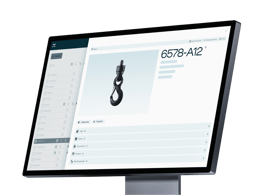
Result = all stakeholders have the access, visibility and control to support compliance.
Equipment compliance software is designed to reduce the burden of compliance documentation.
Many items of work equipment have strict documentation requirements according to national and supranational laws, regulations and standards.
This equipment must have:
Original documentation such as declarations of conformity, user manuals and risk assessments.
Documentation on checks, modifications and inspections.
All documentation accessible to users and auditors.
Documentation requirements can be complex and time consuming for equipment owners, inspectors and suppliers.

Documentation is often:
Spread across different systems such as physical paperwork, Excel, email and internal portals.
Difficult to find, check and share between stakeholders.
This creates extra work chasing answers and constant battle to ensure safety and compliance.
With equipment compliance software, all documentation is kept digitally in one place.
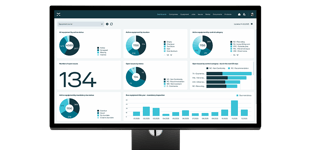
This means:
It can be made accessible to all relevant stakeholders who can also conduct role specific tasks such as pre-use checks and inspections.
Users simply scan QR or RFID tags on equipment to access essential information, complete jobs and demonstrate compliance to auditors.
Admin users gain a complete live overview of equipment that unlocks an unparallel level of control.
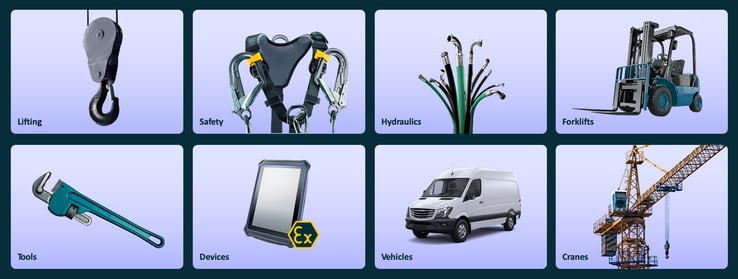
Equipment compliance software is primarily designed for work equipment that has legal requirements for documentation and inspection. This covers many types such as:
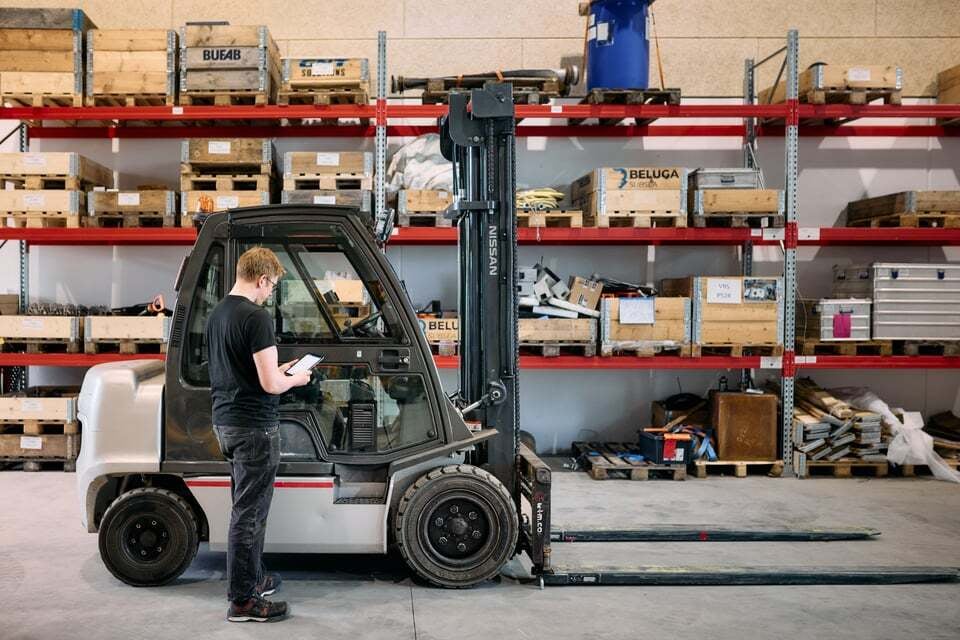
Digital checklists simplify compliance processes for equipment owners.
Equipment owners are ultimately responsible for ensuring that their equipment is safe to use and in compliance with all relevant regulations. That is a heavy burden to carry and can include complex processes and piles of paperwork.
With an equipment compliance software, the burden is lightened as equipment documentation is always available and can be easily kept up to date alongside maintenance compliance records. Any grey areas around the status or location of equipment are removed, preventing incorrect use or loss. At the same time, simple digital tools that are open and connected mean that everyone using equipment can save time and collaborate in one place. This helps to develop a positive safety culture.
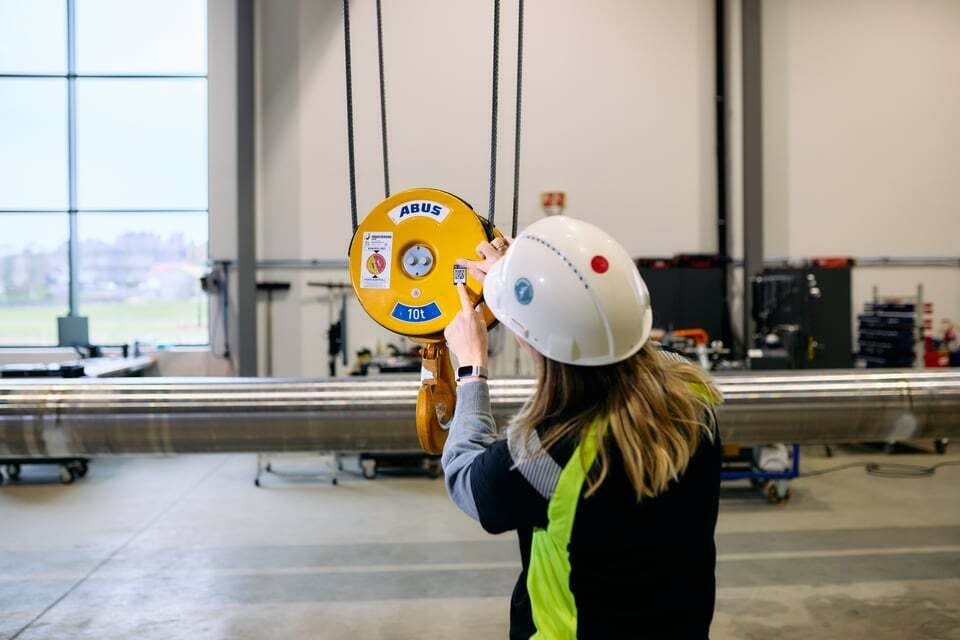 Inspecting with QR tags and digital tools saves time.
Embracing equipment inspection software can be a differentiator for equipment inspectors. They can stand out to customers by delivering documentation and reports directly through a shared system and contributing to the smooth management of their customer’s equipment. This supports owner inspector collaboration.
Using Onix Inspect as an additional application of Onix Work can vastly improve the speed and accuracy of equipment inspections and help inspectors provide a positive customer experience. Digital checklist, simple equipment identification with tags, offline mode, automatic documentation generation, and digital delivery all contribute to faster and more accurate inspections. Inspectors have reported completing inspections up to four times faster with Onix.

Supporting customers with digital documents and tracking helps suppliers stand out.
A huge amount of admin and documentation is required when equipment suppliers process orders and deliver them to customers. Each individual piece of equipment must often be numbered manually and come with specific documentation. With multiple data inputs and siloed processes occurring across different sites, there is significant potential for errors.
With a digital equipment compliance system, that potential can be reduced with automated systems, templates, simple equipment identification and digital transfer of documents. The result is improved accuracy, total traceability and a strong customer experience.
When equipment owners, inspectors and suppliers work together in an open equipment compliance software, they develop a positive network effect that benefits all stakeholders.
The network effect occurs because each additional owner, inspector or supplier using the same platform makes it easier to exchange equipment data and documentation. Suppliers can deliver structured equipment records directly to owners, inspectors can update those same records, and owners retain a continuous equipment history.
This reduces duplicated data entry, document transfers and disconnected systems across the equipment lifecycle.
| Stakeholder action | Shared result |
| Supplier creates the equipment record and adds documentation | Owner receives structured data without recreating it. |
| Owner registers use, location and reported issues. | Inspector has better information before an inspection. |
| Inspector completes the inspection and certificate. | Owner receives an updated compliance record immediately. |
| Owner grants controlled access. | Auditors and employees can retrieve the information they need. |
Many Onix users point to this network effect as being a significant benefit that helps them remove silos with their stakeholders. It is common for owners to require inspectors and suppliers to work within equipment compliance software to gain their custom.
Equipment compliance software systems are the modern approach to equipment compliance management and will become an essential tool as regulations develop to mandate digital documentation for work equipment.
In the European Union (EU), this change will come into effect in 2027 when the EU Machinery Regulation will begin to require that some work equipment documentation be provided digitally. Businesses working with equipment will need to prepare to manage large quantities of digital documentation.
To learn more about the changes implemented by the EU Machinery Regulation, read these FAQs.
As a result of these changes, equipment compliance software will become not only a nice to have for improved efficiency, safety and compliance – but a need to have. Making a plan for implementing an ECMS into businesses that work with equipment is an important first step towards ensuring long term compliance. Specialist digital solutions for equipment compliance, management and maintenance will help businesses stand out from the crowd and ensure that they are future ready.
Choosing a platform can feel complex when you don’t know exactly what you are looking for. Ensuring that the platform has the right features and tools to manage equipment and documentation related tasks is essential.
Here are a few things to look for that can indicate a strong specialized equipment compliance software:
🔧 Equipment-specific data structure
🔎 Inspection and checklist functionality
📑 Certificate and document management
🏷️ QR, RFID or NFC identification
👤 Role-based access
🤝 Owner–inspector–supplier collaboration
💬 In-platform communication tools
👣 Complete equipment history and audit trail
📱 Mobile and offline access
↔ Integration capabilities
🔐 Data ownership and security
🏗️ Support for relevant equipment types and regulatory processes
Need help developing your plan for a more efficient, safe and complaint future with work equipment? Get in touch and hear how Onix can help 👇


