


A quick guide to the ATEX 137 Workplace Directive
Navigate the ATEX 137 Workplace Directive for explosive atmospheres with our guide. Understand safety standards and ensure compliance for worker protection.

Pre-use checks are a simple but critical part of working safely with equipment. They help prevent accidents, reduce downtime, and ensure compliance with regulations across Europe.
In this guide, you’ll learn:
You can also download ready-to-use checklists below.
Pre-use checks are standard practice before operating work equipment. They are quick, visual checks that are conducted by the operator to ensure that equipment is undamaged and safe to use.
In short:
Pre-use checks are common for all types of work equipment. For equipment used for lifting objects and people, they are mandatory according to EU and national laws, regulations and standards.
This guide will cover pre-use checks for lifting equipment and appliances (such as hooks, winches and slings), fall arrest equipment (such as harnesses and fall stops) and vehicles (such as forklifts).
Who performs pre-use checks?
The equipment operator before use.
Pre-use checks are not the same as thorough examinations.
Pre-use checks are quick visual and functional checks, often conducted daily and by operators. They are required by laws and regulations to promote safe use of work equipment, but they do not need to be documented.
Thorough examinations are formal, detailed and legally required inspections carried about by a competent person at regular intervals. These checks may include measurements, dismantlement and further testing such as load testing and non-destructive testing (NDT). Thorough examinations must be documented.
Here’s a simple table to help you compare pre-use checks and thorough examinations:
| Feature | Pre-use Check | Thorough Examination |
| Who | Operator | Competent person |
| When | Before each use | Legally defined intervals (usually 6 or 12 months) |
| Depth | Quick visual/functional | Detailed, technical, sometimes invasive |
| Documentation | Usually not required | Legally required |
| Purpose | Immediate safety | Longterm structural safety & compliance |
| Legal status | Required as part of safe use | Mandatory under lifting regulations |
Do pre-use checks need to be documented?
Not always, but documentation is recommended to ensure consistency and traceability.
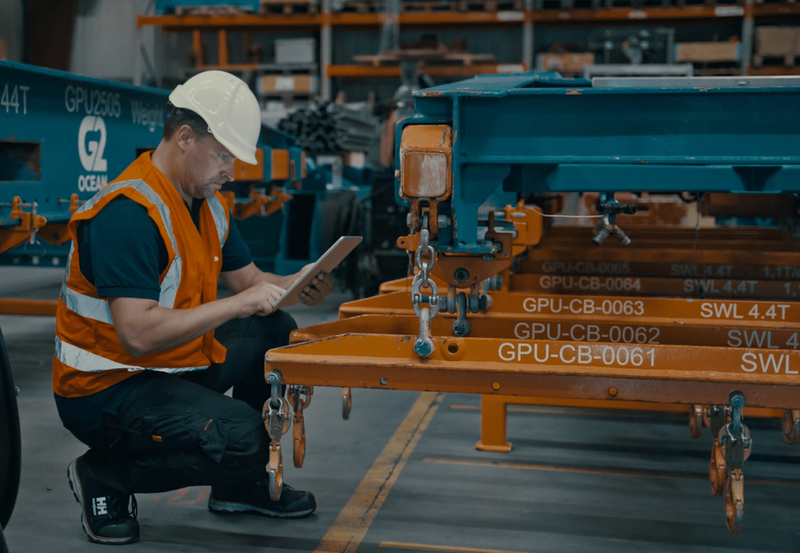
Pre-use checks are quick, visual checks that are conducted by the operator to ensure that equipment is undamaged and safe to use.
Pre-use checks for higher risk work equipment are required in Europe as part of the employer’s duty under the EU Work Equipment Directive (2009/104/EC) to ensure safe equipment use. These requirements are reinforced by manufacturer’s instructions, national regulations and standards.
Preuse checks cover: hooks, latches, ropes, chains, brakes, hydraulics, controls, limit switches, SWL markings
Legal Basis:
🔵 EU: Work Equipment Directive; Machinery Regulation 🟡 Industry: NORSOK R003/R005; EN 13157 (manual lifting equipment) / EN 14492 (powered winches and hoists)
Preuse checks cover: cuts, abrasion, heat damage, deformation, corrosion, missing pins, chain twist/stretch, label readability
Legal Basis:
🔵 EU: Work Equipment DirectivePreuse checks cover: brakes, steering, horn, lights, hydraulics, mast, forks, tyres, seat belt, warning lights, fuel/battery
Legal Basis:
🔵 EU: Work Equipment Directive; Machinery Regulation
🟠 National: Maskinforskriften (NO); PUWER (UK); BetrSichV (DE); Arbobesluit (NL)
🟡 Industry: NORSOK R003; ISO 5057
Preuse checks cover: Cuts, fraying, stitching, deformation, locking mechanisms, labels, shock absorber status
Legal Basis:
🔵 EU: PPE Regulation; Work Equipment Directive
🟠 National: Maskinforskriften (NO); WAHR (UK); BetrSichV + DGUV (DE); Arbobesluit (NL)
🟡 Industry: NORSOK R003/R005; EN 365
Are pre-use checks required by law?
Yes. Pre-use checks are part of the employer’s responsibility to ensure safe use of equipment.
/klatrer1.jpg?width=1125&height=750&name=klatrer1.jpg)
Fall arrest equipment like harnesses can save lives when working at height. Pre-use checks ensure that they are fit for the job.
Pre-use checks should be a simple part of everyday operations. They should be quick, easy to complete and not reduce workday efficiency.
Here’s how to implement them for your team:
The goal is to make checks part of everyday work, without slowing down operations.
How often should pre-use checks be done?
Before each use.
We’ve created some simple pre-use checklists for common equipment types. Simply download them and fill them out to help you get started with pre-use checks for:

.png?width=900&height=499&name=G2%20Ocean%205.2%20(1).png)
With Onix Work you can perform pre-use checks digitally.
Completing and documenting pre-use checks on paper can be time consuming and frustrating. In hands-on work environment, paperwork is easily lost or damaged. Searching for paperwork can slow down jobs and cause costly delays.
With digital tools in Onix Work that’s not a problem. Operators simply complete pre-use checks using an app on their handheld device. This is how it works:
1. Operators look up equipment by either searching in the Onix Worker app or opening their camera to scan an Onix QR or RFID tag.
2. They gain access to a complete overview of the equipment’s essential information including guides and safety instructions.
3. They can check that the equipment has been inspected and is safe to use.
4. They can complete and document set pre-use checklists.
5. They can report any issues with the equipment.
All this information is stored and kept constantly updated in Onix Work. Managers get a complete overview of the equipment’s history for better planning, while workers gain peace of mind that equipment is safe to use.
Norsea Polarbase, a port and supply base in the far north of Norway use Onix Worker for all pre-use checks on forklifts and lifting equipment. The 70+ team use Onix Worker daily for checks and management of over 250 types of equipment. Read the full story here.
Ready to get started with digital pre-use checks in Onix?


